How to cheat in Chess.com in 2026 and what the browser extension route actually involves
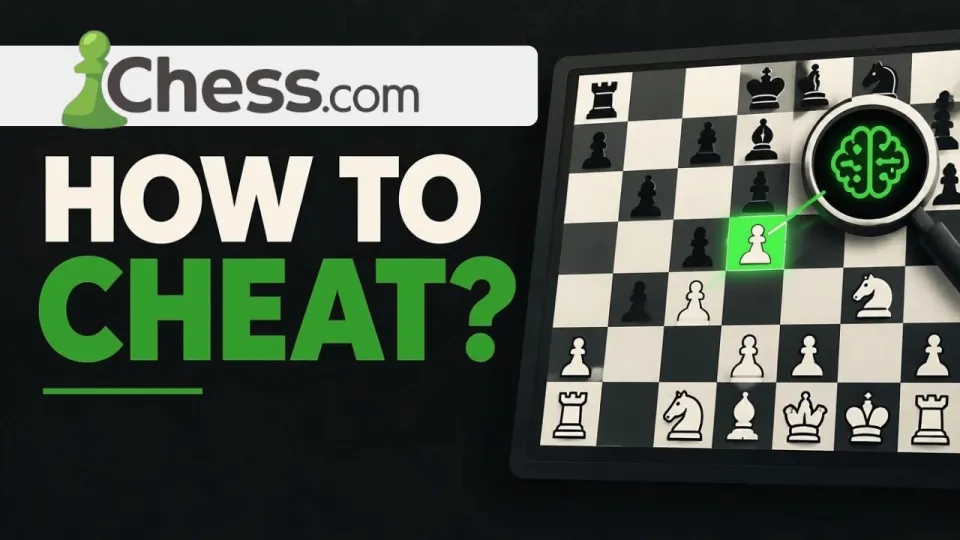
· based on the channel Matyc
The most common way people try to cheat in Chess.com is a browser extension that reads the position on screen and overlays engine moves on top of the board — the method popularized by tools distributed on pages like the xmods.cc item page for the Chess.com cheat. It is a userscript-style add-on, not a hacked client: you install it in the browser, open a game, and the tool suggests moves while you still click the pieces yourself.
What the Chess.com cheat extension actually does
A Chess.com cheat extension is a small piece of JavaScript injected into the browser tab that runs chess.com. It does three things: it scrapes the board state from the page, sends that position to a chess engine, and draws the engine's recommended move over the board. Nothing about the Chess.com servers changes, which is why the tool is described as an overlay or a bot rather than a hack.
The engine behind such tools is almost always Stockfish or a Stockfish derivative, running either in the browser via WebAssembly or on a remote server. Strength settings matter: a full-strength Stockfish finds the top move in milliseconds, but the tool's practical limit is how naturally the human plays the suggested moves. The distribution page linked in the video, xmods.cc, hosts the installer package, and the typical install path is a userscript manager such as Tampermonkey plus the script file itself.
Step-by-step install of the Chess.com cheat
The install is short, but every step has to be done in the same browser profile you use for Chess.com. If you switch browsers or use the mobile app, the overlay will not appear.
- Install a userscript manager. Tampermonkey is the standard choice for Chrome, Edge, Firefox and Opera; the extension must be enabled for the chess.com domain.
- Open the tool page at https://xmods.cc/item/9 and download or install the script from there.
- Confirm the userscript installation in the manager's dashboard and check that the script shows as active.
- Log in to Chess.com in the same browser, start a game, and look for the overlay or panel the script injects next to the board.
- Set the engine depth or strength if the panel offers it; lower depth produces less obvious moves but also weaker suggestions.
If the panel does not appear, the usual causes are a disabled script, an ad blocker stripping the injected element, or a Chess.com page update that broke the selectors the script relies on.
How Chess.com anti-cheat detects engine use
Chess.com's fair play system does not need to catch you mid-game; it works after the fact. Every rated game is stored and run through statistical models that compare your moves with what strong engines would play. The signals that matter are move-matching rates, the time spent per move relative to position complexity, and sudden rating jumps.
A player who follows engine lines for 90% of a game produces a pattern no human sustains, and the same is true of instant replies in sharp tactical positions followed by long thinks in quiet ones. Accounts are usually closed in waves rather than one by one, which is why a cheat can appear to work for weeks and then end in a ban and a rating reset. Casual, unrated and bot games are not policed the same way as rated ones, but reports from opponents trigger manual review regardless of the mode.
Typical problems users run into
The questions that come up most often after people install a Chess.com cheat are about the tool not showing up in a live game. The overlay usually fails because the script was installed in a different browser profile, because the userscript manager is turned off in incognito mode, or because a Chess.com front-end update changed the board markup the script reads.
A second common complaint is not being able to find the download at all: the item page requires you to locate the correct file among the listed items, and the installer link is not always the first element on the page. Third is the expectation gap — the extension suggests moves, it does not play them, so a player still has to move the piece and still has to survive the clock. Anyone expecting the tool to win games on its own will be disappointed, and anyone using it in rated games should assume the account is on borrowed time. There is also a security side: an unverified userscript runs with full access to the chess.com session, so it can read cookies and account data.
Risks of using chess.com cheats
The concrete downside of engine assistance is account loss. Chess.com's Fair Play policy covers rated games and prize events, and confirmed engine use results in closure of the account and removal of its rating history; titles and fair play badges are revoked in serious cases. Reaching a high rating with an overlay also creates a second problem: the account becomes visible, and strong players and moderators review suspicious games manually.
Beyond the ban, the technical risk is real. A browser extension with access to chess.com can read your login session, and userscripts distributed outside official stores are not reviewed by anyone. There is no refund and no support channel when an account is closed, and the tool itself is typically abandoned once Chess.com changes its page structure.
Conclusion
Cheating in Chess.com with a browser extension is technically simple — install a userscript manager, load the script from the distribution page, and an engine overlay appears on the board — but it is a temporary advantage against a detection system built specifically for this pattern. The method is documented in the Matyc video breakdown, which walks through the same install route and shows the overlay in a live game. If you want to try the tool described, the download is on the xmods.cc Chess.com cheat page. Weigh the cost first: a closed account with a wiped rating history is the standard outcome, and the extension itself is unverified code running inside your logged-in session.
Key takeaways
- The cheat method shown is a browser extension distributed through the xmods.cc item page, not a modified Chess.com app.
- The extension overlays engine suggestions on the live board, so the player still has to move the pieces manually.
- Chess.com's anti-cheat compares move accuracy against engine lines and flags accounts in waves, not instantly.
- Chess.com Fair Play policy allows account closure and rating resets for engine assistance in rated games.
- Installing unverified extensions gives the code access to the Chess.com session and account data.
Questions & answers
How do I actually use the Chess.com cheat during a game?
Install the userscript in the same browser where you are logged in to Chess.com, then open a game. The script injects a panel or overlay next to the board with the engine's suggested move; you still have to make the move yourself by clicking or dragging the piece. If no panel appears, check that the script is enabled and that no ad blocker is hiding the element.
Does the Chess.com cheat extension get detected?
Yes, eventually. Chess.com analyses finished rated games with statistical models that compare your moves to engine output, and accounts are closed in waves. High move-matching rates, instant replies in complex positions and sudden rating jumps are the main signals. Unrated and bot games are treated more loosely, but opponent reports can trigger manual review.
Why can't I find the download on the item page?
The tool is distributed through a listing page rather than a direct installer, so the file is one item among several and is not always the first link on the page. Make sure you are on the correct item page, that the userscript manager is installed and enabled, and that your browser is not blocking the script from running on chess.com.
Is it safe to install a Chess.com cheat script?
No. Userscripts from outside official extension stores are not reviewed, and a script running on chess.com has access to your logged-in session and account data. Combined with the near-certainty of a fair play ban in rated games, the practical risk is losing the account and exposing your login.
Source: How to cheat in Chess.com (Chess.com cheats) · Markdown version